By Brian French, founder and publisher, Florida Authority Network
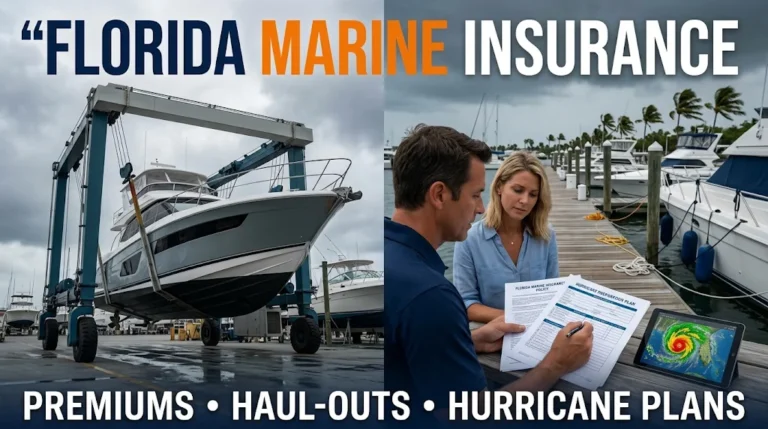
Few costs worry Florida boat owners more than insurance. After years of hurricane losses, rising repair costs and carriers pulling back from the state, premiums climbed and underwriting rules tightened. Owners who had never thought about a haul-out plan suddenly found it written into their policies. Named-storm deductibles that were once a footnote became the largest number on the declarations page.
The story in late 2026 is more nuanced than “the market keeps hardening.” Several recent industry reports describe a softening yacht and boat insurance market after the tight years, even as Florida remains one of the most expensive and demanding places to insure a vessel. This article explains how Florida marine policies are structured, what hurricane clauses require, what drives premiums, how to work with a broker and what the current market conditions mean for owners. It relies on published guidance from insurance agencies, trade reporting and weather forecasters, and it is not insurance advice. Policy terms vary by carrier, so read your own policy and ask your broker questions in writing.
The State of the Florida Marine Insurance Market
Marine insurance in Florida is shaped by two forces: the cost of claims and the availability of capacity. Hurricanes Ian, Helene and Milton and other recent storms damaged large numbers of boats, marinas and docks. Repair costs also rose with inflation in labor and materials. Insurers responded with higher rates, stricter underwriting, higher deductibles and tighter conditions for vessels in the hurricane zone.
By 2026, the picture had begun to change. Insurance Journal published a March 2026 feature titled “Soft Market Hits Yachts, Boat World,” and a speaker at an industry conference in Europe said that for much of the marine market insurance was not prohibitively expensive and that the market was entering a soft phase. Weather also helped: forecasters expected below-average Atlantic hurricane activity in 2026, and as of early October the season had produced eight named storms and no hurricanes, according to an insurance news summary of NOAA and local reporting. NOAA’s August outlook called for 7 to 13 named storms, 2 to 6 hurricanes and 0 to 2 major hurricanes. Reinsurance firm Howden Re cautioned that a single landfalling hurricane can still cause significant insured losses.
For owners, the takeaway is that conditions may be improving, but Florida remains a special case. Boats kept in hurricane-prone areas generally pay more than comparable boats elsewhere, and carriers can tighten again quickly after a major storm.
Policy Structure Essentials
A marine policy is not one coverage but a bundle. Understanding each part helps owners avoid gaps.
Hull and machinery
Hull and machinery coverage pays for physical damage to the vessel, its engines and equipment. It typically covers collision, fire, theft, sinking and storm damage, subject to exclusions and conditions. Two valuation methods are common:
- Agreed value: you and the insurer agree on the value at the start of the policy, and that amount is paid on a total loss. An insurance agency veteran quoted in an owner guide said agreed value is generally better because it protects the owner from market swings.
- Actual cash value: the insurer pays the market value of comparable vessels at the time of loss, often with depreciation. Premiums may be lower, but market values can fall, leaving the owner short.
Protection and indemnity and liability
Protection and indemnity, often called P&I, and liability coverage respond when your vessel injures someone or damages someone else’s property. Liability limits matter more than many owners realize, because a single serious accident can exceed a minimal limit. Larger vessels and charter operations may require much higher limits and specialized coverage.
Pollution and wreck removal
Fuel-spill liability covers cleanup costs required by environmental authorities if you spill diesel or gasoline at the dock or on open water. Wreck removal coverage pays to remove your sunken vessel if authorities require it. These items are sometimes endorsements, and they deserve explicit confirmation, since removing a sunken boat can be expensive.
Towing and on-water assistance
On-water assistance coverage adds towing, fuel delivery and similar services at standard rates. A Florida insurance agency has noted that without it, commercial towing can cost $300 to $700 per hour. A hurricane haul-out reimbursement benefit, available with certain insurers, may reimburse the cost of pulling and storing the boat before a named storm, with amounts commonly in the range of $500 to $1,500 per event according to the same agency.
Named Storm Requirements
For Florida owners, the hurricane section of the policy is where the real risk lives. Carriers manage named-storm exposure through deductibles, geographic limits and warranties.
Haul-out plans and safe havens
Many policies require that the boat be hauled out, stored on a lift or moved to a hurricane-rated facility when a named-storm warning is issued for your area. A Florida agency guide states that failing to comply can void the claim. Another owner guide says many policies require haul-out within 24 to 48 hours of a named-storm warning, and notes that some policies, especially for the Caribbean, exclude named windstorm damage altogether. Industry commentary after the 2025 season noted that for absentee owners, particularly of larger vessels, options can be very limited, and that carriers commonly require a detailed hurricane plan and a guaranteed haul-out provision.
A written hurricane plan should cover who is responsible for moving the boat, where it will go, what it will be secured with, how crew and contractors will be contacted and how the owner will confirm the work was done. If you rely on a marina or yard, confirm in writing that your boat is on its haul-out list and how priority is determined.
Named-storm deductibles
Named-storm deductibles are usually a percentage of the insured value rather than a flat dollar amount. A $500,000 yacht with a 10 percent named-storm deductible means the owner pays the first $50,000 of hurricane damage. At 20 percent, the owner pays $100,000. Many owners have been surprised by these figures when filing claims, so know your percentage before the season begins.
| Insured value | 5% deductible | 10% deductible | 20% deductible |
|---|---|---|---|
| $100,000 | $5,000 | $10,000 | $20,000 |
| $500,000 | $25,000 | $50,000 | $100,000 |
| $1,000,000 | $50,000 | $100,000 | $200,000 |
Timing rules
Once a storm is forecast or named, insurers typically stop binding new coverage or changing terms. A Florida insurance firm explains that you generally cannot add storm coverage right before a hurricane hits, so any changes must be made before or early in the season. Treat June 1 as a planning deadline, not the day to start asking questions.
Marina warranties
Some policies include warranties about where the boat is kept. If a policy says the boat will be stored in a particular marina or dry stack building, moving it without notice can create a coverage problem. Likewise, a marina’s own insurance, such as the sort that covers its structures and operations, does not cover your boat. Marina operators face their own pressures. One industry guide reports that marina insurance premiums rose 38 percent from 2022 to 2025 and that marina hurricane deductibles are commonly 5 to 10 percent of total insured value, which helps explain why marinas have tightened contract terms and storm procedures.
What Drives Premiums
Premiums reflect the boat, the owner and the location. Underwriters commonly consider:
- Vessel value and age: older boats may face stricter survey requirements and limited coverage options.
- Type of boat and engines: high-performance and large vessels typically cost more to insure.
- Location: boats in the hurricane belt during storm season pay significantly more. One owner guide says boats in the hurricane zone typically pay two to three times as much as boats that are located farther north in summer and south in winter.
- Owner experience and claims history: boating experience, safety courses and a clean loss record help.
- Navigational limits: policies define where you can cruise, and operating outside those limits may void coverage.
- Storage and security: a hurricane-rated dry stack building, a gated marina or a lift in a protected location can reduce risk.
A local insurance expert quoted by a Florida television station in June 2026 said comprehensive boat insurance in the state averages about $600 to $1,200 a year, with lower rates possible for boaters who commit to a hurricane haul-out plan or use a secure, hurricane-resistant dry stack facility. Those figures are an average for typical recreational boats and will not apply to larger or more valuable vessels.
Mitigating Premium Increases
- Document a haul-out plan. Many carriers now expect one, and some give credits for it.
- Ask about lay-up credits. Hauling out during hurricane season may reduce rates.
- Invest in professional crew and training. For larger vessels, a licensed captain, certified crew and documented maintenance support better terms.
- Install safety and security systems. Bilge alarms, fire suppression, tracking devices and theft deterrents may help, depending on the insurer.
- Consider a higher standard deductible. A higher deductible can lower premiums, but increases your out-of-pocket exposure after a claim.
- Avoid small claims. A clean record can matter more than recovering a minor repair cost.
- Get a current survey. A recent survey with minimal deficiencies helps underwriters value the vessel.
- Re-shop regularly. Market conditions change, and different carriers have different appetites. Agencies commonly work with several major marine carriers.
Working With Marine Brokers
A knowledgeable marine broker is often worth the effort, especially for larger, older or custom vessels. A broker can compare carriers, explain policy language, negotiate terms and help present your boat in the best light. For harder-to-place risks, brokers may use surplus lines markets, which operate under different regulatory rules than standard admitted insurers and may offer more flexible coverage with less regulatory oversight. Ask whether a policy is written by an admitted carrier or in the surplus lines market, because it affects the protections available if the insurer fails.
Questions to ask your broker
- Is the policy agreed value or actual cash value?
- What are the named-storm deductible, haul-out warranty and navigational limits?
- What are the liability limits and is pollution coverage included?
- What happens if I cannot haul out in time?
- Are there surveys or crew requirements for renewal?
- Which carrier is writing the policy and how are claims handled?
An Owner’s Pre-Season Checklist
- Read your policy’s hurricane, navigational limits and warranty sections in full.
- Confirm your named-storm deductible in dollars.
- Write and share a hurricane plan, and confirm haul-out arrangements with your marina or yard.
- Photograph and document the boat, equipment and maintenance records.
- Update your emergency contact list with your broker, marina, captain and insurer’s claims line.
- Review your coverage annually and re-shop if conditions have changed.
The softer market is welcome news, but it does not change the fundamentals. In Florida, insurance is only as good as the plan behind it. Owners who know their deductibles, document their preparation and keep their haul-out commitments will be in the strongest position when the next storm approaches.
Frequently Asked Questions
Is the Florida marine insurance market getting softer?
Several 2026 industry reports describe a softening yacht and boat insurance market, but Florida remains a high-risk, higher-cost location, and conditions can change quickly after a major storm.
What is a named-storm deductible?
It is a separate hurricane deductible, usually a percentage of the insured value. For example, a 10 percent deductible on a $500,000 yacht means the owner pays the first $50,000 of damage.
Do I have to haul out my boat before a hurricane?
Many Florida policies require haul-out, storage on a lift or relocation to a hurricane-rated facility when a named-storm warning is issued, and failing to comply can void the claim. Check your policy.
What is agreed value coverage?
Agreed value means you and the insurer set the value at the start of the policy and that amount is paid on a total loss, which protects you from market value swings.
Can I buy storm coverage when a hurricane is approaching?
Typically no. Insurers usually stop binding new coverage or changes once a storm is forecast or named, so make changes before or early in the season.
What does a marine broker do?
A broker compares carriers, explains policy terms, negotiates coverage and can place harder risks, sometimes through surplus lines markets.
About the Author
Brian French is the founder and publisher of the Florida Authority Network, a collection of more than 35 Florida business news, industry, video and press release publications. His career before publishing was in finance: he served as a Vice President and Trust Officer at both Merrill Lynch and SunTrust, and as a Portfolio Manager at Merrill Lynch Trust Company and Merrill Lynch Investment Managers – Private Investors. Earlier, he was a Financial Advisor at Shearson American Express and E.F. Hutton and a Common Stock Analyst at Independence Securities in Greensboro, North Carolina. He passed Level II of the CFA Program. Brian lives near Tampa, Florida, with his wife.
This article is general information for Florida boaters and marine businesses. It is not legal, tax, insurance or investment advice. Confirm current rules, fees and dates with the responsible agency or a licensed professional before you act.
Sources and Further Reading
- Insurance Journal, Soft Market Hits Yachts, Boat World (March 23, 2026)
- Marine Industry News, Marine Insurers Shift Focus From Historic Losses to Climate Resilience (Metstrade commentary)
- Elite Yacht Care, Yacht Insurance in Florida: Complete Guide for Owners (February 10, 2026)
- GreatFlorida Insurance, 2026 Guide to Boat Insurance in Florida
- WWSB (MySuncoast), Insurance Expert Urges Florida Boaters to Check Coverage Before Fourth of July Weekend (June 29, 2026)
- Global Marine Insurance Agency, Yacht Insurance and Market Update (Dave Trostle)
- Sun Coast Insurance, Storm Ready: Your Boat Insurance and Safety Tips for Hurricane Season
- Sun Coast Insurance, Florida Yacht Insurance
- Marine OS, Marina Insurance: The Complete 2026 Coverage Guide for Operators
- Live Insurance News, Florida hurricane season 2026 tracker (NOAA August 2026 outlook)
- Global Reinsurance, Howden Re Forecasts Quieter Atlantic Hurricane Season
About the Author