By Brian French, founder and publisher, Florida Authority Network
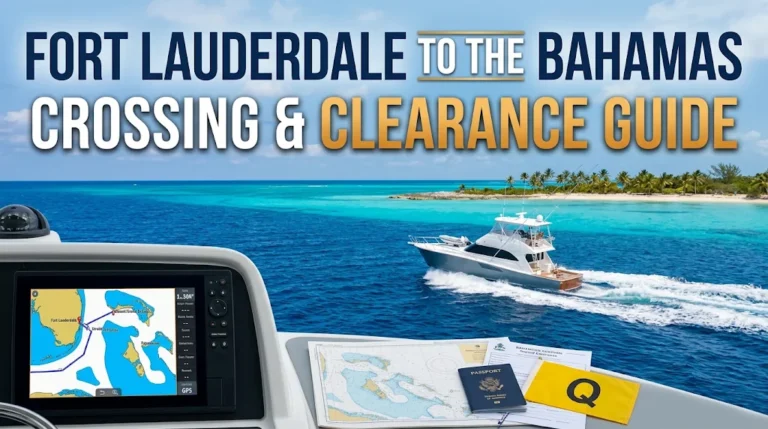
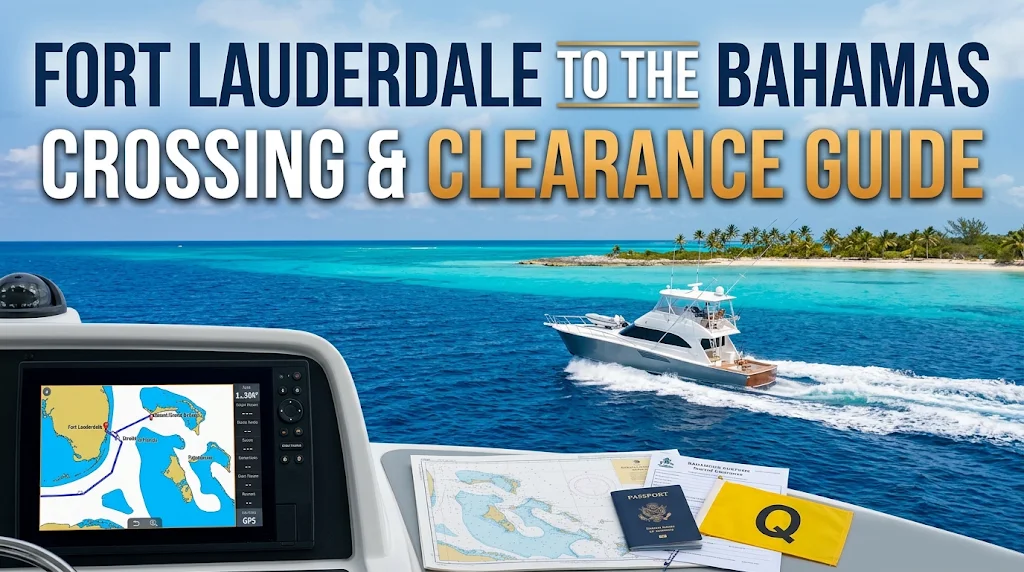
For thousands of Florida boaters, the Bahamas are the first real passage of the season. Bimini sits about 50 miles from Fort Lauderdale across the Gulf Stream, close enough for a day trip in a capable boat and far enough to feel like a different world once you arrive. The crossing is a classic rite of passage, but it is not casual. The Gulf Stream can turn a calm forecast into a rough ride when wind opposes current, and the rules for entering and cruising in Bahamian waters changed again on April 1, 2026.
This guide covers the essentials: why Fort Lauderdale works as a staging point, how to choose a weather window, how the 2026 Bahamas permit fees and Click2Clear system work, how to navigate the shallow banks, and what to consider for communications and return clearance. Fees and procedures change, so confirm everything with the Bahamas Customs Department and U.S. Customs and Border Protection before you leave.
Why Fort Lauderdale and Port Everglades Make a Good Staging Ground
Fort Lauderdale is one of the largest yachting centers in the world, with an extensive network of marinas, boatyards, chandleries, electronics installers and provisioning options. For a Bahamas passage, that means you can fix problems, load fuel, buy charts and spares, and wait out weather in a place with plenty of services. Port Everglades gives access to the Atlantic through a deep, well-marked inlet that handles everything from small boats to the largest yachts and cruise ships. Boaters leaving from nearby inlets in Miami, Palm Beach and elsewhere on the southeast coast follow a similar pattern, but Fort Lauderdale’s concentration of marine services makes it a natural launching point.
Before you go, complete a full pre-departure inspection of the boat. Engines, fuel filters, steering, bilge pumps, electronics, navigation lights and safety gear should all be tested. Carry spare parts that match your engines and a basic tool kit, and consider adding a spare anchor, extra fuel capacity if you will be out for several days and a reliable way to contact help from remote anchorages.
Crossing the Gulf Stream
The Gulf Stream is a powerful current that flows northward along Florida’s east coast. In the Straits of Florida, it can run at several knots, which means your course over the ground and your course through the water are not the same. It also creates the potential for steep, short-period seas when the wind blows from the north against the current.
Choosing a weather window
Experienced captains look for a stable period with light winds, preferably from the south or east, and a forecast that stays settled for the entire crossing and a day or two beyond. Cold fronts in the winter and early spring are the main hazard. A strong north wind, even a moderate one, can build dangerous seas in the stream, and conditions can deteriorate quickly if a front arrives early. Consult multiple sources, including the National Weather Service marine forecast, offshore forecasts and wind and wave models, and treat any forecast that contains thunderstorms or a front with caution.
Sea state and boat handling
- Plan the crossing for daylight, with an early departure so that you arrive with ample daylight to enter the harbor and anchor or dock.
- Know your boat’s fuel range and reserve, taking into account the current and the possibility of slowing down for weather.
- Brief all passengers on safety gear, man-overboard procedures and the location of life jackets, flares and the EPIRB or personal locator beacons.
- Keep a constant watch for commercial traffic, which is common in the Straits, and use AIS if available.
- Float-plan the trip. File a float plan with a trusted shore contact, including your departure time, route, destination and expected arrival.
Safety equipment
Beyond the legal minimums, a prudent equipment list for a Bahamas crossing includes a properly sized life raft or tender, a ditch bag, an EPIRB or other emergency beacon registered with NOAA, a handheld VHF radio, a satellite messenger or phone, spare batteries and a first aid kit with seasickness medication. Check expiration dates on flares and fire extinguishers before you leave.
Bahamas Customs, Immigration and Cruising Permits
Entry to the Bahamas by private boat is managed through the Bahamas Customs Department’s Click2Clear system. The Department states that all pleasure vessels are entered and paid for through the Cruising Permit module in Click2Clear, and that it aims to move toward a paperless, cashless process. A recent summary of procedures for captains explains the steps: pre-file the pleasure-vessel inbound declaration on the portal, receive a rotation number beginning with PCR, and then pay for the cruising permit in the portal’s payments section. No login is needed for the pleasure-craft module, according to that summary.
How the fees changed
The fee picture has shifted twice in less than a year. On July 1, 2025, the Bahamian government replaced popular short-term cruising permits with annual permits at $500 for boats under 50 feet and $1,000 for boats from 50 to 100 feet, according to trade reporting, and the new structure tripled the cost of a permit for some categories of boats. Boaters objected, and trade reporting says visitor numbers to the islands fell over the winter. A revised schedule took effect April 1, 2026, which boaters generally welcomed as a return to more reasonable costs.
| Vessel length | 30-day permit | 6-month permit | 12-month permit |
|---|---|---|---|
| Up to 30 feet | $150 | $300 (up to 50 feet) | See Bahamas Customs |
| Over 30 and under 50 feet | $250 | $300, with one free re-entry | $500 (reported) |
| 50 to under 100 feet | See Bahamas Customs | $750 | See Bahamas Customs |
| Over 100 feet | See Bahamas Customs | $2,000 | See Bahamas Customs |
The table summarizes figures published by the Bahamas Customs Department and reported by boating media as of the April 2026 changes. Confirm the current amounts before travel, because fee structures have been revised repeatedly and some categories were not clearly listed in the sources reviewed.
Other fees to budget for
- A passenger arrival tax of $20 per person applies when a pleasure vessel brings more than three non-resident crew or passengers aged six or older, according to the Customs Department.
- Fishing permits were separated from the cruising permit in July 2025, with foreign vessel fishing permits listed at $100 for vessels under 50 feet and $300 for vessels 50 feet and over. Check the current fee schedule if you plan to fish.
- Dockage, fuel and provisions in the Bahamas can be expensive compared with Florida, so build a realistic budget. One boater quoted in trade coverage described monthly docking fees of $1,500 for a 50-foot boat.
Practical clearance steps
- Create your vessel and crew profile in Click2Clear before departure and pre-file the inbound declaration.
- Pay the permit fee through the portal and save your receipt and rotation number.
- Carry passports for everyone aboard, vessel registration or documentation, proof of insurance and any required permits for pets, firearms or special equipment. Firearms are tightly restricted in the Bahamas and require advance authorization.
- Fly the quarantine flag when required and follow instructions on arrival for clearing in at a designated port of entry.
- Clear out through the system when departing, and keep copies of all documents for your return to the United States.
Navigation Across the Banks
Beyond Bimini lies the Great Bahama Bank, an expanse of shallow water where depths of a few feet can persist for miles. The banks are beautiful, with clear water and sand bars, but they require careful navigation.
Visual navigation
On the banks, polarized sunglasses, a high vantage point and good light are crucial. Sun angle matters: with the sun high and behind you, coral heads and shallow patches are much easier to spot. Avoid navigating in poor light, such as early morning or late afternoon, when the sun is low. Many cruisers also use the color of the water as a rough guide, with deeper water appearing darker blue and shallow sand appearing lighter, but depth is never certain from color alone.
Charts and electronics
Electronic charts are helpful, but their accuracy in the Bahamas can be uneven. Use more than one chart source if possible, and compare them with paper charts or cruising guides. Track your position carefully, and use your depth sounder constantly. Mark waypoints where you have verified depth, and treat any route recommended by a local as a starting point that you confirm yourself. Reports from boaters about wrecks and obstructions near Bimini and the Berry Islands show that debris can move after storms, so remain vigilant, especially after cold fronts.
Anchoring
- Choose a protected anchorage that suits the forecast wind direction, and recognize that fronts can shift the wind through several directions in a few hours.
- Set the anchor firmly and check that it is holding, particularly in grass or hard sand.
- Use an anchor alarm and keep a watch if wind is forecast to increase.
- Review the Bahamas anchorage fee structure under the 2026 rules if you plan to anchor for extended periods near marinas or in designated areas.
Communications and Satellite Systems
Connectivity affects both safety and comfort in the islands. Cellular coverage is limited away from larger settlements, and roaming charges can be high. Many cruisers now use satellite internet systems, including Starlink Maritime, to maintain connectivity for weather updates, email and messaging while at anchor. A satellite system adds weight, power consumption and cost, but it also lets you download weather files, communicate with family and, if necessary, call for assistance. Do not rely on a single method. Carry a VHF radio, a handheld backup and, for offshore passages, a satellite communicator or emergency beacon.
Check the terms of your satellite plan before you leave, because service areas and plan types vary, and confirm whether your equipment is approved for maritime use and for use in the Bahamas. Keep your devices protected from salt and moisture, and have a backup power supply.
Returning to the United States
When you return to Florida from the Bahamas, you must clear U.S. Customs and Border Protection. Boaters typically report their arrival by phone, in person at a designated reporting location or through approved mobile reporting programs for eligible vessels. Rules can differ for U.S. citizens, permanent residents and foreign nationals, and certain items such as fresh produce, plants and some foods may be restricted. Review CBP’s current guidance for recreational boaters before you depart, and do not land passengers or unload items until you have complied with the reporting requirements.
A Passage-Planning Checklist
- Choose a weather window with light winds and no fronts in the forecast for the crossing and the following day.
- Complete pre-departure maintenance and test all safety equipment.
- Pre-file in Click2Clear, pay the cruising permit and save confirmations.
- Brief the crew and file a float plan.
- Cross in daylight, monitoring weather and traffic throughout.
- Navigate the banks with good light, current charts and constant depth monitoring.
- Maintain reliable communications, with at least two independent methods.
- Prepare for return clearance and keep all documents organized.
The Bahamas reward preparation. A carefully planned crossing, correctly filed paperwork and respect for the banks turn a potentially stressful trip into one of the best parts of the boating year.
Frequently Asked Questions
How far is the Gulf Stream crossing from Fort Lauderdale to Bimini?
The crossing from South Florida to Bimini is roughly 50 miles, which many boaters treat as a daylight passage in a capable vessel and a good weather window.
What is Click2Clear?
It is the Bahamas Customs Department’s online system for entering pleasure vessels, paying cruising permits and receiving a rotation number before arrival.
How much is a Bahamas cruising permit in 2026?
Under the schedule that took effect April 1, 2026, boats up to 30 feet pay $150 for 30 days, and boats over 30 and under 50 feet pay $250 for 30 days, $300 for six months or a reported $500 for a year. Confirm current fees with Bahamas Customs.
Do I need a separate fishing permit in the Bahamas?
Fishing permits have been listed separately from cruising permits since July 2025, with fees that depend on vessel length. Check the current schedule before you fish.
What is the biggest risk in crossing the Gulf Stream?
Wind against current. A north wind opposing the north-flowing stream can create steep, dangerous seas, so avoid crossings during or just after cold fronts.
Do I have to clear customs when I return to Florida?
Yes. You must report to U.S. Customs and Border Protection on arrival, and passengers and goods must comply with CBP rules.
About the Author
Brian French is the founder and publisher of the Florida Authority Network, a collection of more than 35 Florida business news, industry, video and press release publications. His career before publishing was in finance: he served as a Vice President and Trust Officer at both Merrill Lynch and SunTrust, and as a Portfolio Manager at Merrill Lynch Trust Company and Merrill Lynch Investment Managers – Private Investors. Earlier, he was a Financial Advisor at Shearson American Express and E.F. Hutton and a Common Stock Analyst at Independence Securities in Greensboro, North Carolina. He passed Level II of the CFA Program. Brian lives near Tampa, Florida, with his wife.
This article is general information for Florida boaters and marine businesses. It is not legal, tax, insurance or investment advice. Confirm current rules, fees and dates with the responsible agency or a licensed professional before you act.
Sources and Further Reading
- Bahamas Customs Department, Pleasure Vessel Clearance and Cruising Permits
- Bahamas Customs Department, About Click2Clear
- Southern Boating, Bahamas Cruising Permit Fees 2026: What Boaters Need to Know (April 8, 2026)
- Soundings, Bahamas cruising permit fee change effective April 1 (2026)
- Rock Wave Bimini (rwbimini.com), Bahamas Boating Fees 2026
- Association of Bahamas Marinas and IYBA, Bahamas Boating and Fishing Fee Structures and Regulations as of July 1, 2025
- Waterway Guide, Bahamas: New Changes May Have Implications for Boaters
- Noonsite, Bahamas country page: pre-arrival and cruising permit information
- Yacht Management South Florida, A Yacht Owner’s Guide to the April 2026 Bahamas Entry Regulations
- Sail Magazine, New Permit Requirements in the Bahamas
- San Diego Sailing Association, Click2Clear step-by-step guide (PDF)
About the Author